
Affiliate disclosure: This post may contain affiliate links. If you purchase through one of these links, we may earn a small commission at no extra cost to you.
Every photograph on this website has been captured by us in the wild. Like our wildlife photography? Follow us on Instagram .
About This Guide
We visited Vienna in August 2024 with the aim of exploring and photographing the city’s remarkable urban wildlife. Over several evenings we enjoyed and photographed European hamsters at Meidling Cemetery, along with European beavers, European ground squirrels (souslik) and red squirrels at locations across the city. This guide is based entirely on our own first-hand experience and we hope it helps you enjoy similarly memorable wildlife encounters in Vienna.
When you think of great wildlife destinations across Europe, the urban city of Vienna is probably not what comes to mind. Yet hidden amongst the city’s parks, cemeteries and green spaces is one of Europe’s most surprising wildlife experiences: the chance to see critically endangered European hamsters living wild in the heart of a capital city
Vienna is one of the very few places in the world where these adorable mammals have successfully adapted to urban life. Alongside its thriving hamster population, the city is also home to European beavers, European ground squirrels (also known as souslik) and red squirrels, making it an unexpectedly rewarding destination for wildlife enthusiasts and photographers.
In this guide, we’ll show you exactly where to find Vienna’s wild European hamsters, the best time to visit, how to photograph them responsibly, and what other wildlife you can look out for during your visit.
(All photos in this guide were taken by us during our visit to Vienna.)

Table of Contents
The European Hamster
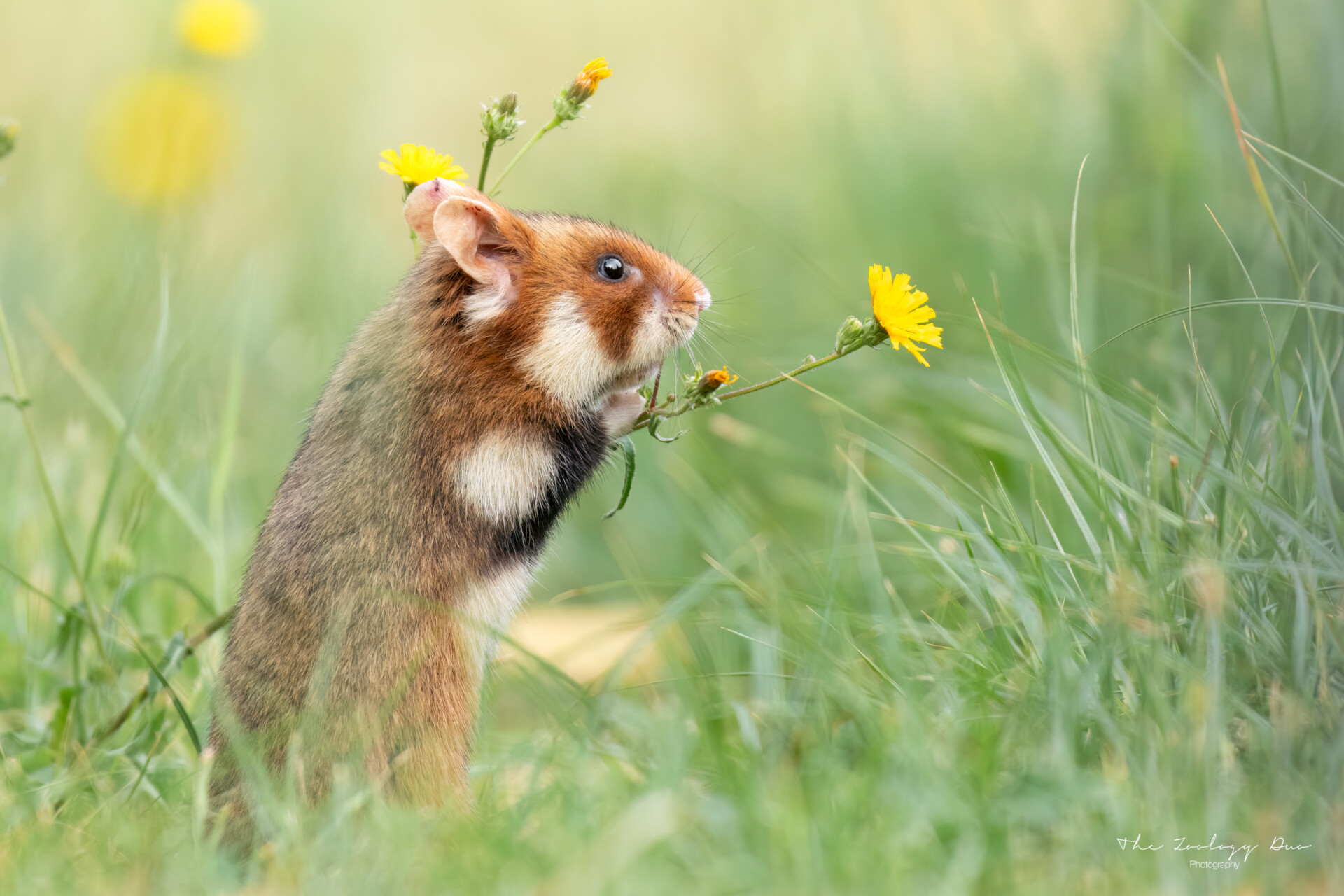
European hamsters (Cricetus cricetus) are much larger and more robust than the domesticated hamsters that many people are familiar with. Growing up to three times the size of your typical pet Syrian hamster, you will probably be surprised with their chunky build and colourful fur, making them look almost like a small guinea pig than a hamster.
Although typically found in the farmlands and steppes of Central and Eastern Europe, Vienna’s population has adapted remarkably well to urban life. The city’s parks, cemeteries and green spaces provide ideal habitat, allowing these fascinating animals to thrive on the doorstep of the busy city streets.
European hamsters are active between spring and early autumn, before spending the winter hibernating in underground burrows. If you’re hoping to see them during your visit, you’ll need to plan your trip between approximately April and September, when they emerge to forage and prepare for the next winter.
Remarkably, these are not just any wild mammals – the European hamster is classified as Critically Endangered, making Vienna one of the few places in Europe where visitors can reliably observe this species in the wild.

Where to See Wild Hamsters in Vienna
If you’re hoping to see wild European hamsters in Vienna, the best and most reliable place may come as a surprise: it is one of the city’s cemeteries. While it may sound unusual at first, these large green spaces provide exactly the habitat that hamsters need, with extensive grassland, wildflowers and relatively little disturbance.
During our visit, we spent several evenings searching for hamsters and found Meidling Cemetery (Friedhof Wien Meidling) to be by far the most reliable location. We saw multiple European hamsters on every visit, watching them feeding on flowers, running between their burrows and often coming within just a few metres of us as long as we remained quiet and still. It offers excellent opportunities to observe and photograph these endearing animals while remaining easily accessible by Vienna’s excellent public transport network.
Meidling Cemetery (Friedhof Wien Meidling)

The eastern side of Meidling Cemetery consistently proved to be the most productive area during our visit, with numerous burrows scattered throughout the rough grassland surrounding the gravestones. We found this area to be particularly active during the late afternoon and early evening, when hamsters regularly emerged to feed on flowers and forage through the vegetation, though we were still able to see them at all times of day.
Meidling Cemetery is easy to reach by metro, tram and train, with Wien Meidling station located around a 10–15 minute walk from the main hamster viewing area. If you’re planning to explore several parts of the city during your stay, the Vienna City Card offers unlimited travel using Vienna’s wonderful transport system on the metro, trams, buses and local trains, along with discounts at many popular attractions.
Tips for Seeing Hamsters in Vienna
Visit Between April and September
European hamsters spend the winter hibernating in their underground burrows, so you’ll only have a chance of seeing them during the warmer months. Plan your visit between April and September, when they emerge to feed, defend their territories and prepare for the next hibernation season.
Visit in the Late Afternoon for the Best Activity
European hamsters are largely crepuscular, meaning they are most active around dawn and dusk. During our visit, activity noticeably increased as the afternoon turned into evening, with hamsters more frequently emerging from their burrows to feed on flowers and forage through the grassland. If possible, arrive a few hours before sunset to spend as much time with them as possible before the sun sets.
That said, we also saw hamsters during the middle of the day, so don’t worry if you can’t visit in the evening.

Sit Quietly and Let the Hamsters Come to You
Rather than constantly walking around the cemetery, we found it much more rewarding to quietly sit near an area with several active burrows and simply wait. Although European hamsters are naturally shy and cautious, Vienna’s population is surprisingly tolerant of people. As long as we remained quiet and still, they regularly came within just a few metres of us whilst they foraged around the area.
Look for Active Burrows
Once you’ve found an area with lots of burrows, spend a few minutes watching rather than moving on too quickly. Hamsters often disappear underground for short periods before re-emerging, and we frequently watched individuals moving between neighbouring burrows while foraging amongst the surrounding vegetation.
Respect the Wildlife
Never attempt to touch, feed or chase wild hamsters. Keep a respectful distance, avoid blocking burrow entrances and take care not to trample the surrounding grassland or wildflowers. Allowing the animals to behave naturally will result in a far better wildlife encounter for both you and the hamsters.
Remember You’re Visiting a Cemetery
Although Meidling Cemetery has become well known amongst wildlife photographers and local nature enthusiasts, it remains an active cemetery, so please be respectful of that. Keep noise to a minimum, stay on appropriate paths where possible and always be mindful of people visiting.

Tips for Photographing Vienna’s Hamsters
Bring a Telephoto Lens
For photography enthusiasts, a telephoto lens is perfect. It allows you to capture detailed portraits without disturbing the animals. Although Vienna’s hamsters can become surprisingly tolerant of people sitting quietly, using a longer focal length lets you photograph natural behaviours such as feeding, grooming and moving between burrows while giving them plenty of space.

Get Down to Eye Level
One of the biggest improvements you can make to your wildlife photography is to photograph from the animal’s eye level. This is especially true for small mammals like European hamsters. Getting as low to the ground as possible creates a much more intimate perspective and is the key to getting a softer, more blurred, less cluttered background, which helps draw the viewer’s attention directly to the hamster. It also gives a far stronger sense of the animal’s world than photographing from standing height.
Don’t be surprised if you end up lying flat on the grass alongside the occasional local wildlife photographer – we certainly did!

Find a Good Spot and Let the Action Come to You
Rather than following hamsters around the cemetery, choose an area with several active burrows and find yourself a good spot to sit and observe them. When choosing your position, take note of the background, the direction of light and whether you are likely to disturb other wildlife or visitors.
A little planning can make a huge difference, helping you ensure your background isn’t cluttered or distracting and that the lighting isn’t harsh. It is these little things that can be the difference between a poor photograph and a truly great photograph.
Other Wildlife in Vienna
While the European hamster is without doubt Vienna’s star wildlife attraction, it’s far from the only species worth looking out for. During our visit, we were surprised by just how much wildlife the city has to offer, with numerous memorable encounters.
European Ground Squirrel (Souslik)

Vienna is also home to thriving populations of European ground squirrels (souslik). These charismatic little mammals are active during the warmer months and spend much of the day standing upright to scan for danger before dashing back to their burrows.
Although located a little outside the city centre, we found many of them at Hirschstetten Botanical Gardens (Blumengärten Hirschstetten – Google Maps), which is well worth a visit if you’re hoping to see European ground squirrels. We found that the best areas to see them were the lawns around the TCM (Traditional Chinese Medicine) Garden, Mexican Garden and Pannonian Garden.
Tips on spotting souslik: as you explore the gardens, keep an eye out for small shapes standing tall in the grass. Due to their cautious nature, your first view may be a fleeting glimpse as it vanishes into its burrow upon spotting you. This is your opportunity to find a place to sit and patiently wait until it re-emerges. As long as you stay quiet, still and sit low down, you should be treated to some amazing views!
European Beaver

One of the highlights of our trip, which was well worth the 4am alarm, was our first time watching wild European beavers along the Danube. These enormous rodents are most active around dawn and dusk, when they can be seen swimming, feeding and carrying branches along the riverbanks. Seeing wild beavers swimming in front of the backdrop of a Vienna cityscape was every bit as memorable as the hamsters themselves.
Red Squirrel

Several of Vienna’s parks also support healthy populations of red squirrels, which provide excellent photographic opportunities between searches for hamsters and other wildlife. We encountered them in both Meidling Cemetery and the Vienna Botanical Gardens, though they were quite hard to find.

Although the European hamsters were our primary wildlife target, we left impressed by the city’s incredible diversity of urban wildlife. If you enjoy wildlife photography or mammal watching, it’s well worth spending a few extra days exploring beyond the hamster hotspots.
Final Thoughts
Spotting wild hamsters in Vienna is a truly unique experience that combines the thrill of wildlife observation with the ease and charm of an urban setting. Whether you’re a local looking for a new adventure or a visitor eager to see a different side of Vienna, this is a wildlife encounter you won’t forget. So next time you’re in Vienna, make sure you take a break from the museums and palaces, and head to the parks and green spaces where these adorable little residents might just be waiting to say hello.
Seeing wild European hamsters in a cemetery in Vienna is one of the most unusual wildlife experiences we’ve had anywhere in Europe. Few capital cities offer the chance to observe a Critically Endangered mammal living freely amongst historic streets, parks and cemeteries, making Vienna a unique destination for wildlife enthusiasts and photographers.
During our visit, we were amazed not only by how easy the hamsters were to find, but also by the variety of other wildlife living in the heart of the city. From European beavers and ground squirrels to red squirrels and excellent birdwatching opportunities, Vienna proved to be far more than just a city break.
So, the next time you visit Vienna, take a break from the palaces, museums and cafés, and spend an evening exploring one of the city’s peaceful green spaces. With a little patience, you should find yourself watching one of Europe’s most intriguing mammals just a few metres away – an experience that’s likely to become one of the highlights of your trip.
To find out more about some of the world’s most incredible wildlife destinations and how to see them for yourselves, please check out some of our other articles. Whether you are interested in visiting Australia, Indonesia, India or Sri Lanka, we hope we can inspire you to start planning your own wildlife journeys!
Other Blog Posts